The envelope is the one piece of brand collateral the recipient touches before anything else — and the one most companies treat as an afterthought. Considered envelope design turns a plain delivery into a brand moment, signals that what is inside matters, and, in direct mail, decides whether the envelope gets opened or binned. This guide covers how we approach envelope design as a Singapore studio: the standard sizes, the construction and window options, the postal realities, and the print specs that keep an envelope clean and mailable.
Standard envelope sizes
Most business correspondence uses a handful of standard sizes, and sticking to them keeps postage and printing straightforward:
- DL (110 × 220mm) — the everyday business envelope; fits an A4 letter folded in three.
- C5 (162 × 229mm) — fits A5, or A4 folded once; good for documents you do not want creased three times.
- C4 (229 × 324mm) — fits flat, unfolded A4; for contracts, certificates and reports.
- C6 (114 × 162mm) — compact, for cards and invitations.
Bespoke sizes and square envelopes make a statement for invitations and premium mailers, but check postal rules first — non-standard shapes can cost more to post and may need manual handling.
Construction and seal options
How an envelope is built affects both the look and the practicality:
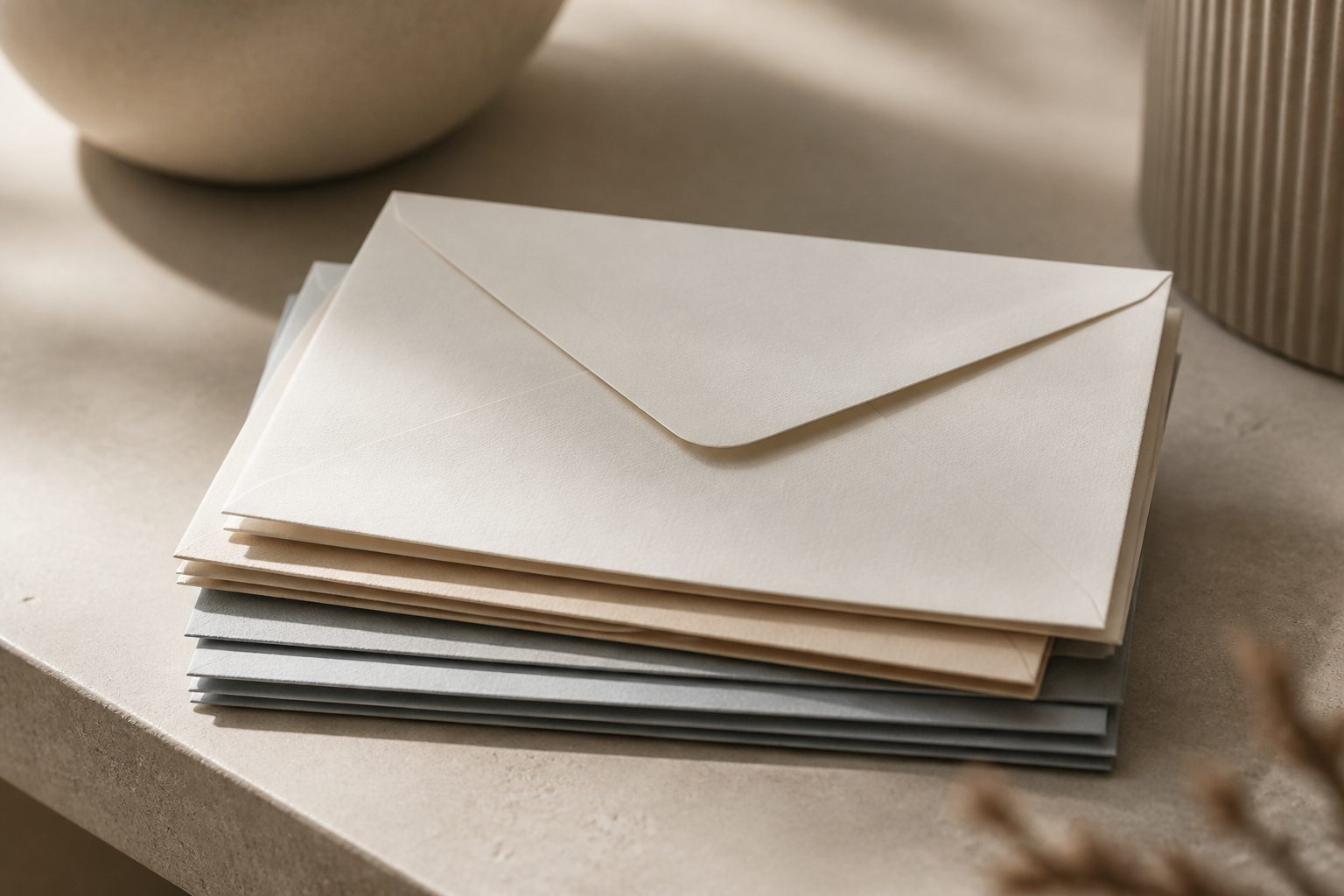
- Flap shape — a straight (wallet) flap is clean and modern; a pointed (banker) flap reads more traditional. The flap is prime real estate for a return address or a small brand mark.
- Window — a die-cut window (or an open-aperture, plastic-free window) lets a printed address show through, saving on addressing and aligning the brand with the document inside.
- Seal — gummed (lick), self-seal (peel strip), or wax-look for premium invitations. Self-seal is the practical choice for volume mailers.
- Lining — a printed inner liner is a small luxury for invitations and premium kits, revealed as the envelope opens.
Designing for the post (not just the screen)
An envelope has functional zones the design must respect. Postal systems read and stamp specific areas, so you cannot simply cover the whole face in artwork:
- Keep the address area clear — a clean panel, usually lower-centre to right, with good contrast so handwritten or printed addresses stay legible and scannable.
- Leave room for stamps or franking — top right; avoid placing artwork where postage and postmarks land.
- Use the back flap and edges — return address, brand mark, a short message or pattern, where they will not interfere with delivery.
For direct mail, the front is a tiny billboard: a teaser line, a clean brand mark, or sheer restraint can all lift open rates depending on the audience. The goal is to look worth opening, not to look like junk.
The format choice also signals what is inside before the envelope is opened. A textured, heavier envelope reads as an invitation or a personal letter; a plain printed DL reads as routine business. For a premium mailer, the envelope is the first chance to set expectations, so we treat it as part of the piece rather than mere packaging — the stock weight, the flap detail and even the way it opens all contribute to the impression.
Matching the envelope to what is inside
An envelope should feel of a piece with the letter, card or mailer it carries — same colours, type and logo lockup. When the outer envelope and the inner pieces share a system, the whole delivery feels deliberate. Envelopes are part of the stationery and mailer set we design through our branding and design service, alongside letterheads, compliment slips and mailer boxes. You can see brand and print systems we have built in our portfolio.
Print specs and stock
Envelopes are usually printed on 90–120gsm paper for letters, heavier for premium pieces. Two production routes: printing on pre-made envelopes (simpler, limited bleed and coverage, ink avoids the glued seams) or printing flat then die-cutting, folding and gluing (full-bleed coverage and inside printing, but more set-up). Build artwork with 3mm bleed where used, keep heavy ink off seal areas, supply on the envelope dieline if printing flat, use CMYK with Pantone for exact brand colour, and proof a physical sample — ink coverage near folds and seals behaves differently in reality than on screen.
Frequently asked questions
Can we print full colour all over an envelope?
If the envelope is printed flat and then made up, yes — you get full bleed and can print the inside too. On pre-made envelopes, coverage is limited because ink has to avoid the glued seams and the sealing strip. Decide the production route up front, as it changes the design freedom.
What size envelope fits an A4 letter?
DL (110 × 220mm) fits A4 folded in three; C5 (162 × 229mm) fits A4 folded once; C4 (229 × 324mm) fits flat, unfolded A4. Choose based on whether you mind the document being creased.
Do window envelopes still make sense?
For volume mailers, yes — a window means you print the address once on the document and skip separate addressing, and it keeps the letter and envelope aligned. Plastic-free open or paper-glassine windows are the more sustainable choice now.
Designing a mailer, invitation or full stationery set? Tell us what you are sending and we will design envelopes that are mailable, on brand and worth opening.