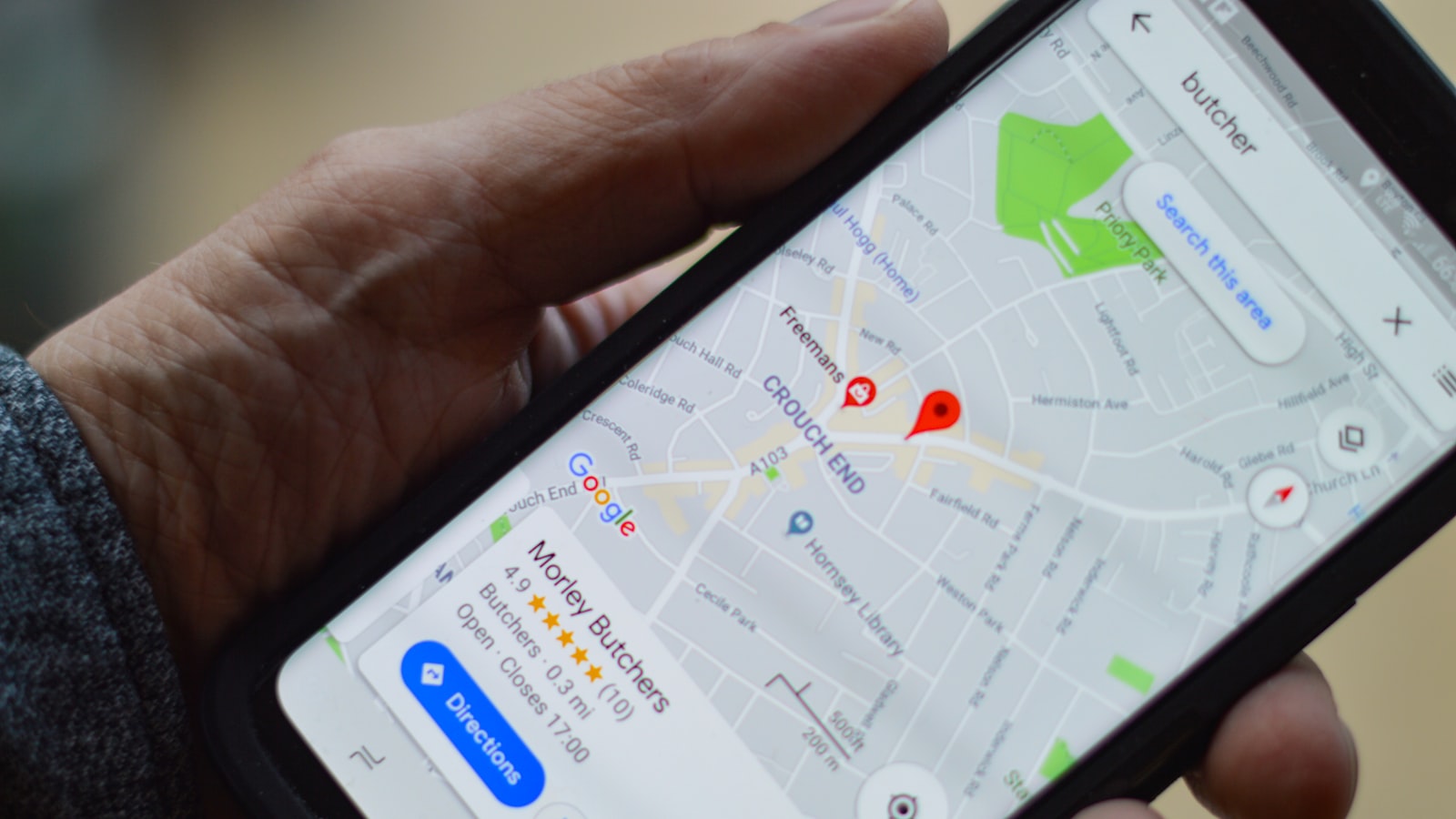
For a Singapore business that serves nearby customers — a clinic, a café, a renovation firm, a tuition centre — your Google Business Profile is often the first thing a buyer sees, well before your website. It’s the listing that shows up on Google Maps and in the “local pack” of results when someone searches “physio near me” or “best chicken rice Tiong Bahru”. Get your Google Business Profile right and you turn that free real estate into calls, directions and walk-ins. This guide is the practical version of how we optimise one.
It’s also free. Unlike paid ads, a well-run profile keeps working without a daily budget — which is exactly why it’s worth an afternoon of effort.
Why your Google Business Profile matters so much
When someone searches with local intent on a phone, Google often shows three map listings before any organic links. That block is prime visibility. If you’re not in it, you’re effectively invisible for that search — no matter how good your website is.
In Singapore, where almost everyone searches on mobile and relies on Maps to navigate our MRT-and-bus city, the profile is doing the heavy lifting: opening hours, the “Call” button, directions, photos and reviews. Most of a buyer’s decision happens on that card. Your job is to make the card as complete and convincing as possible.
Claim and verify your listing first
Before any optimisation, you need ownership. Search your business name on Google, and if a listing already exists, click “Claim this business”. If nothing exists, create one at business.google.com.
Verification is usually by postcard, phone, email or video, depending on the category. In Singapore this often means a postcard to your registered address — allow a week or two. Until you’re verified, you can’t edit the important fields, so start here.
Fill in every field — completeness is the foundation
Google rewards complete profiles, and buyers trust them more. Work through all of it:
- Business name — your real, exact name. Don’t stuff keywords like “Best Plumber Singapore” into it; that breaches Google’s guidelines and can get you suspended.
- Primary category — the single most important ranking field. Pick the most specific category that fits (e.g. “Italian restaurant”, not just “Restaurant”). Add secondary categories for other services.
- Address and service area — a real address if you have a storefront; a service area (e.g. “islandwide”, or specific towns) if you go to the customer.
- Hours — accurate opening hours, plus special hours for public holidays like CNY, Hari Raya and Deepavali. Wrong hours generate one-star reviews fast.
- Phone and website — a local number buyers can tap to call, and a link to the most relevant page.
- Attributes — wheelchair access, halal options, free Wi-Fi, women-led, and so on. These power filtered searches.
Write a description and choose the right services
Your description (up to 750 characters) should plainly say what you do, who you serve, and what makes you different — in normal Singaporean English, not marketing fluff. Lead with the useful stuff in the first sentence, since that’s what shows before “more”.
Use the Services and Products sections to list exactly what you offer, with short descriptions and SGD prices where it helps. A renovation firm might list “HDB BTO package”, “kitchen carpentry” and “false ceiling”; a salon might list each treatment with its price. This is content Google can match against searches, so be specific.
Photos, posts and the parts most people skip
Listings with good photos get noticeably more clicks for directions and calls. Add a clear logo, a cover image, real interior and exterior shots, your team, and your actual products or work. Refresh them every so often — a listing that hasn’t added a photo in two years looks dormant.
Use Google Posts
Posts appear on your profile like mini social updates — promotions, events, new products, festive specials. They signal an active business and give buyers a reason to act. Post a couple of times a month if you can. If you already run social content, this is easy to fold in; our social media management team often repurposes the same assets here.
Turn on messaging and the Q&A
Enable chat so buyers can message you directly, and seed the Q&A section with the questions you actually get asked — parking, halal certification, walk-in vs appointment — and answer them yourself. Better to control those answers than leave them to strangers.
Reviews are the real ranking lever
After your primary category, reviews are the biggest driver of both ranking and conversion. The pattern that works:
- Ask consistently. The easiest time is right after a good experience. A short link via WhatsApp or a QR code at the counter removes friction.
- Reply to every review — good and bad. A calm, specific reply to a complaint reassures the next reader far more than a perfect five-star average.
- Never buy fake reviews. Google detects patterns, and a wipe or suspension costs you years of trust. Slow and real wins.
Aim for a steady trickle rather than 30 reviews in one week, which looks engineered. A flow of recent, genuine reviews tells Google your business is alive and tells buyers you’re worth choosing.
Keep it ranking with the right signals
Local ranking comes down to relevance, distance and prominence. You control relevance (categories, services, description) and prominence (reviews, photos, posts, and links from elsewhere). Pair a strong Google Business Profile with consistent name-address-phone details across directories and a solid website, and the whole thing compounds. If you want the website side handled too, our performance marketing team treats the profile as one part of a wider local SEO setup.
Frequently asked questions
How long does Google Business Profile optimisation take to show results?
Completing and verifying the profile has an effect within days to a few weeks. The compounding gains — from steady reviews, fresh photos and posts — build over a few months. Treat it as ongoing maintenance, not a one-off task.
Can I rank without a physical storefront in Singapore?
Yes. Service-area businesses can set a service area instead of a public address. Everything else — categories, services, reviews and photos — works the same way, and a complete profile still earns local-pack visibility.
How many reviews do I need to compete?
There’s no fixed number; it’s relative to your competitors and category. Look at the businesses ranking above you, then aim to match their recency and quality over time. A steady stream of recent, genuine reviews usually matters more than a large but stale total.
What’s the most common mistake with a Google Business Profile?
Stuffing keywords into the business name, then leaving the rest half-finished. Use your real name, fill in every field properly, and let your categories, services and reviews do the ranking work instead.
Want your business found by nearby buyers? Tell us about your business and we’ll help you optimise your Google Business Profile and the local search around it.