The interview is the backbone of brand video — testimonials, founder stories, expert explainers, case studies all rest on someone talking to camera. And it is deceptively hard to do well. A bad interview video is poorly lit, hollow-sounding and stiff; a great one feels warm, credible and effortless. This guide covers the setup that makes an interview look professional and, just as importantly, how to get a nervous person to give you a usable, natural story.
The setup: lighting, framing and background
Most of what makes an interview look professional happens before anyone speaks.
Lighting
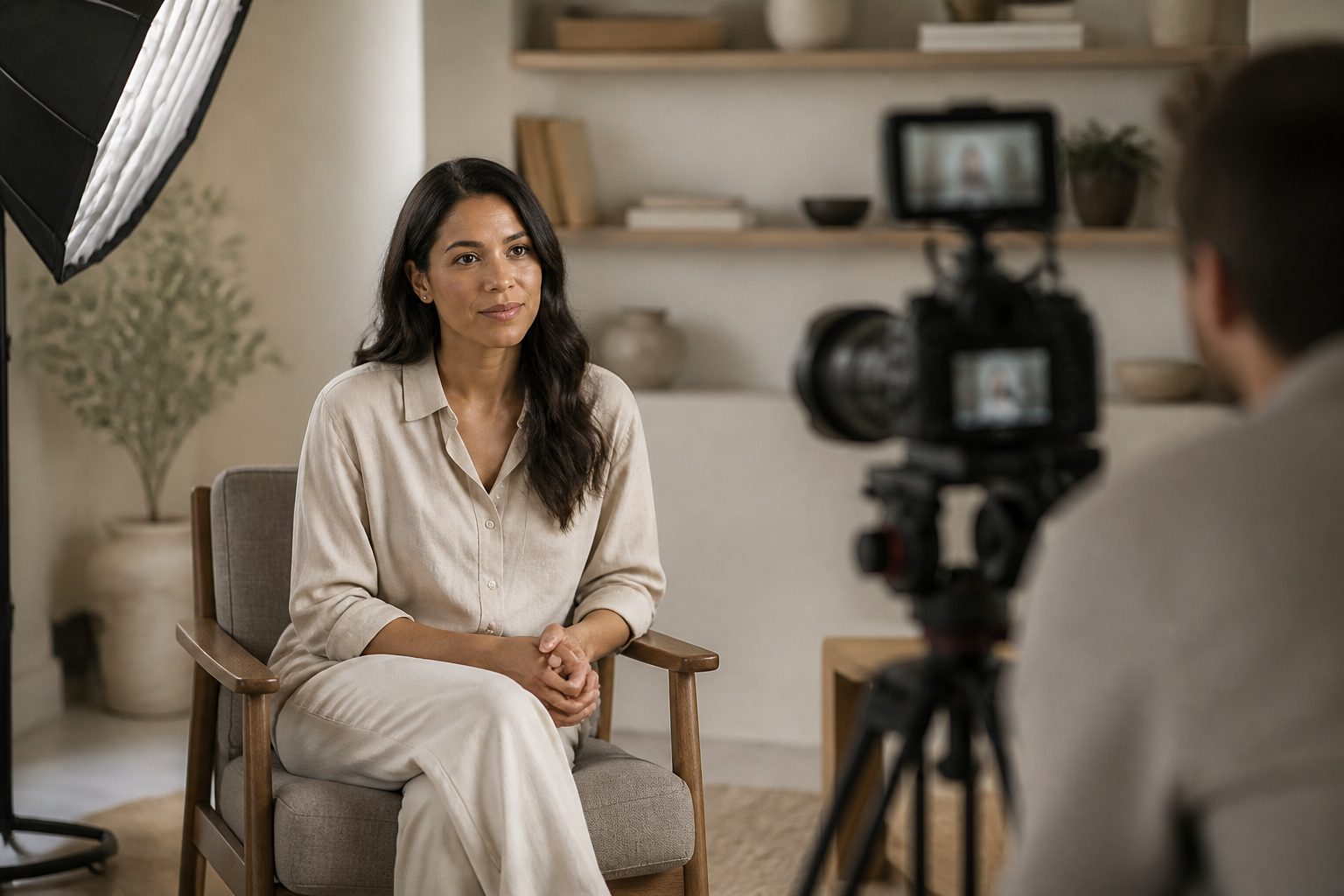
Flat, overhead office light makes people look tired. A simple soft key light to one side, a gentle fill to soften the shadows, and ideally a little separation from the background gives depth and makes the subject look credible. Natural window light, controlled well, can do a lot of this for free.
Framing
The standard is a medium shot, subject slightly off-centre, eyes about a third from the top, with a little headroom. The interviewee looks just off-camera at the interviewer, not down the lens — this feels like a conversation rather than an address. A clean, intentional background (an office, a relevant setting, or a soft out-of-focus space) keeps the focus on the face.
Background
The background should say something about the person without distracting — a workshop for a craftsperson, a clean office for an executive, the venue for a venue owner. Avoid clutter and avoid anything growing out of their head.
Audio is non-negotiable
Viewers forgive imperfect picture; they switch off bad sound. For an interview, that means a proper microphone — a discreet lapel mic clipped to the subject, or a shotgun mic just out of frame — never the camera’s built-in mic. Film in a quiet room, away from air-con hum, traffic and echo. If you take one thing from this guide, make it this: clean audio is what separates a professional interview from a homemade one.
Two cameras, or one with a plan
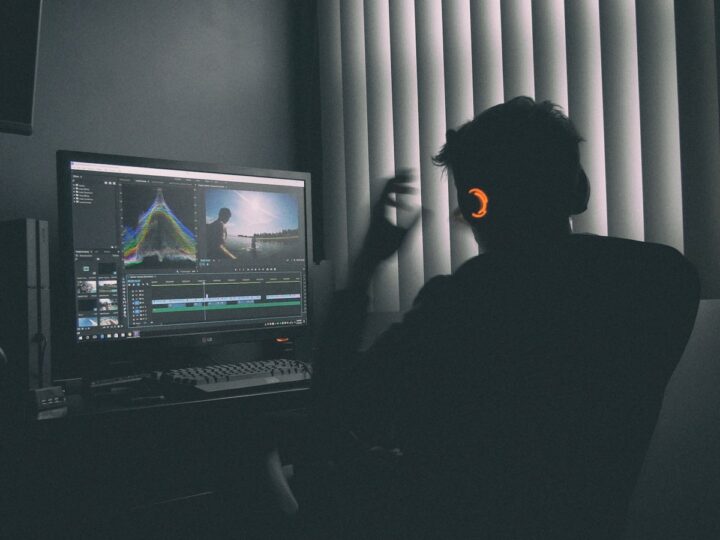
A two-camera setup — one straight-on medium, one tighter or at a slight angle — lets the editor cut between angles to remove pauses, “ums” and stumbles invisibly, and to add energy. It is the easiest way to make an edited interview flow naturally.
If you only have one camera, the answer is B-roll. Plenty of relevant supplementary footage — the person at work, the product, the place — gives the editor something to cut to so that pauses can be tightened without an obvious jump. Either way, the plan must exist before filming, because you cannot fix a single static, unbroken take in the edit.
Getting a natural performance: the human part
The best gear is wasted if the person freezes up. This is the skill that matters most, and it is about how you run the room:
- Put them at ease first. Chat off-camera, explain there are no wrong answers and that mistakes are fine because it is edited. A relaxed subject is a watchable subject.
- Ask open questions. “Tell me about the day you realised…” beats “Were you happy with the result?” Open prompts draw out stories; yes/no questions kill them.
- Ask them to answer in full sentences. Because your questions are usually edited out, ask them to fold the question into the answer — “The biggest change was…” rather than “Yes, definitely.”
- Embrace silence. When you stop talking, people fill the gap — often with their most honest, useful lines. Do not rush to the next question.
- Go again, gently. If an answer is great but rambling, say “that was brilliant — give me the short version” and let them tighten it themselves.
This interviewing craft is exactly what our videography team brings to a shoot — drawing out a real story from someone who has never been on camera. You can see the results in the customer and founder stories in our portfolio.
Preparing your interviewee
Send the broad themes in advance so they can think, but never send the exact questions to rehearse word for word — over-prepared answers sound scripted and dead. Tell them to wear solid colours (avoid tight patterns that shimmer on camera), to bring a couple of relevant props or settings if useful, and reassure them that it is edited so they can relax. A confident, comfortable subject is worth more than any piece of equipment.
Frequently asked questions
Should the interviewee look at the camera or the interviewer?
For most brand interviews, just off-camera at the interviewer — it feels conversational and natural. Looking directly down the lens is reserved for a deliberate, direct address to the viewer, which is a different and more confronting effect.
Do I really need two cameras for an interview?
Not always, but a second angle makes editing far cleaner by letting you cut out pauses and stumbles invisibly. With one camera, plenty of B-roll achieves a similar result, as long as you plan that coverage before the shoot rather than after.
How do I get a nervous person to relax on camera?
Chat off-camera first, reassure them that mistakes are edited out, ask open questions, and allow silences. A few minutes of easy conversation before rolling, and a warm interviewer who is genuinely listening, does more than any technical trick.
Ready to start? Tell us about your project and we will film an interview video that looks polished and sounds genuinely human.