Every week a Singapore SME founder asks us some version of the same question: can’t AI just make the video now? It’s a fair thing to ask in 2026. The tools are genuinely good, the demos are slick, and the pricing looks tempting next to a full crew day. So here’s our honest, practitioner’s view of ai video production — what actually works in a real workflow, what still needs a human, and how to decide which is which without wasting your budget.
We use these tools ourselves, most days. This isn’t a hype piece and it isn’t a “robots are coming” scare piece. It’s what we’d tell you over a coffee if you were weighing up your next campaign.
Where AI genuinely helps in the video workflow
The honest answer is: the parts of production that are repetitive, text-based, or “good enough on the first pass” are where AI earns its keep. In our own videography work, these are the stages where we reach for it without hesitation.
- Scripting and ideation. AI is a fast sparring partner for angles, hooks and outlines. It won’t hand you a finished brand script, but it’ll get you from blank page to a working draft in minutes — which you then rewrite in your own voice.
- Storyboarding and previs. Rough frames and shot ideas that used to take a half-day of sketching now take an hour. Useful for aligning a client before anyone books a camera.
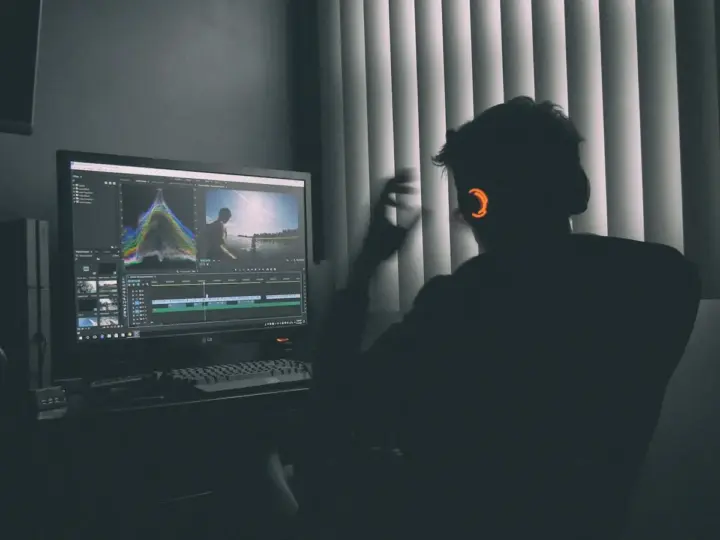
- Rough cuts and editing assists. Auto-transcription, silence removal, and first-pass assembly cuts genuinely save editor hours. You still grade, pace and polish by hand.
- Auto-captioning and translation. This is the strongest use case for Singapore. Burned-in captions for silent-autoplay feeds, plus quick English–Mandarin–Malay–Tamil drafts, are a huge time saver — with a human proofread before it ships.
- B-roll and stock gap-fills. Generated or AI-sourced filler for abstract cutaways (data flowing, a generic skyline) can plug holes cheaply when a real shot isn’t worth a crew.
- Voiceover drafts. Synthetic VO is fine for internal cuts, rough timing, or explainer drafts while you wait on the real talent.
Where AI still falls short
Now the other half of the ledger — and this is where the marketing demos go quiet. These are the parts of the job where trusting AI will cost you more than it saves.
- Direction and taste. Knowing why one take lands and another feels flat, when to hold a beat, what to cut — that’s judgement built over years, not a prompt.
- Brand nuance. AI doesn’t know your positioning, your tone rules, or the difference between “confident” and “arrogant” for your particular audience. It averages; brands need specificity.
- On-location shoots. A real founder on camera, your actual office, your product in someone’s hands at a Tampines HDB or an Orchard flagship — none of that is generatable. Authenticity still has to be filmed.
- Rights and safety. Generated faces, voices and stock carry real IP and likeness risk. For anything client-facing in Singapore, we keep a clear licensing and consent trail — AI muddies that fast if you’re not careful.
- Consistency across a series. Getting the same look across ten videos is where generative tools still drift. A human system holds a brand together.
The Singapore SME lens: cost and speed trade-offs
For a lean marketing team, the appeal is obvious — AI compresses timelines and trims the line items you’d normally pay a crew for. That’s real. A social cut-down series that once took a fortnight can turn around in days when captioning, transcription and rough assembly are automated.
But the trade-off is quality control and risk. Cheap and fast only wins if the output still represents your brand well and doesn’t create a rights headache. In practice, the SMEs who get the most from AI treat it as a way to stretch a production budget — do the hero shoot properly with a crew, then use AI to spin out the variations, captions and language versions. That’s a very different thing from asking AI to replace the shoot entirely.
When to trust AI vs when to hire a crew
A simple rule we use: the closer the video is to your brand’s front door, the more human it should be. Rough internal explainer? Let AI do most of it. Hero brand film, founder story, product launch? Book the crew.
- Lean on AI for: internal training, rough drafts, caption and language versions, social variations of an existing shoot, quick explainer previews.
- Hire a crew for: brand films, testimonials with real customers, product hero shots, anything where lighting, direction and authenticity carry the message.
The same logic applies beyond video. If you’re pairing content with campaigns, the way you distribute matters as much as the make — which is where thinking about performance marketing alongside production tends to pay off. And for stills, real photography still beats generated imagery whenever a human or product is the subject.
How we actually build AI into our pipeline
We don’t pick “AI or human” — we sequence them. The pattern that works for us and our clients looks like this:
- Human strategy and brief — what the video is for, who it’s for, what it must say.
- AI-assisted scripting and storyboards, edited hard by a person.
- A real shoot for anything brand-facing, planned around the storyboard.
- AI-assisted rough cut, transcription and captions.
- Human edit, grade, sound and final QC — always the last word.
- AI to generate the language versions and social cut-downs, proofed before release.
The through-line: AI handles volume and speed; humans hold quality and judgement. If you want the mechanics of that final stage, our notes on video editing tips go deeper on what stays manual and why.
Frequently asked questions
Can AI fully replace a video production crew in 2026?
No — not for brand-facing work. AI is excellent for drafts, captions, translations and social variations, but direction, on-location shoots, brand nuance and rights management still need people. Use AI to stretch a production budget, not to skip the shoot that carries your message.
Is AI video production cheaper for a Singapore SME?
It can be, for the right jobs. AI trims cost on repetitive, text-based and variation work — captioning, rough cuts, language versions. The saving is real when you keep the hero shoot human and use AI to multiply its output, rather than expecting one prompt to replace a full production.
Are AI-generated visuals safe to use commercially?
Treat them carefully. Generated faces, voices and stock can carry IP and likeness risk, so for anything client-facing we keep clear licensing and consent records and avoid passing AI output off as real people or places. When in doubt, film it or license it properly.
What’s the single best use of AI in video today?
Captioning and translation. For Singapore’s multilingual, silent-autoplay feeds, fast draft captions and English–Mandarin–Malay–Tamil versions save the most time — as long as a human proofreads before it goes live.
Not sure where AI fits your next video? We’ll tell you straight — which parts to automate, which to shoot properly, and how to get more out of your budget. Tell us about your project and we’ll map it with you.