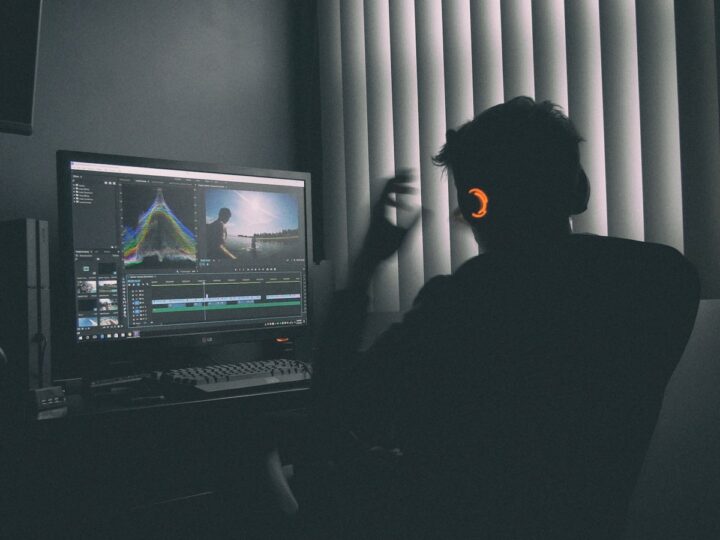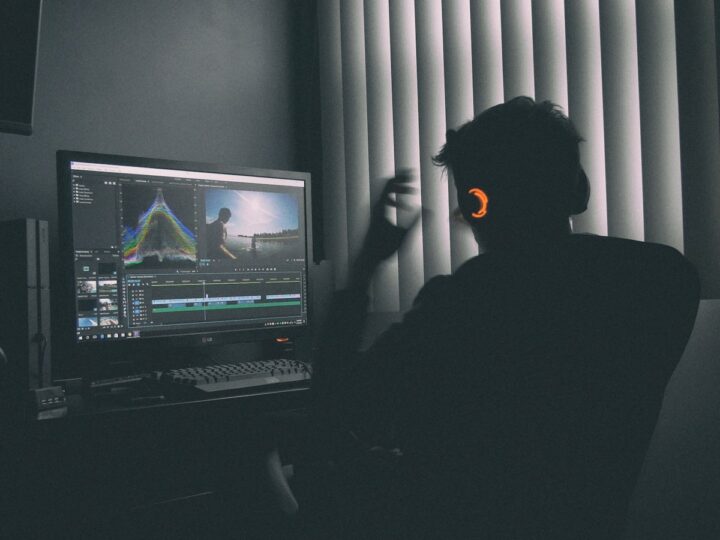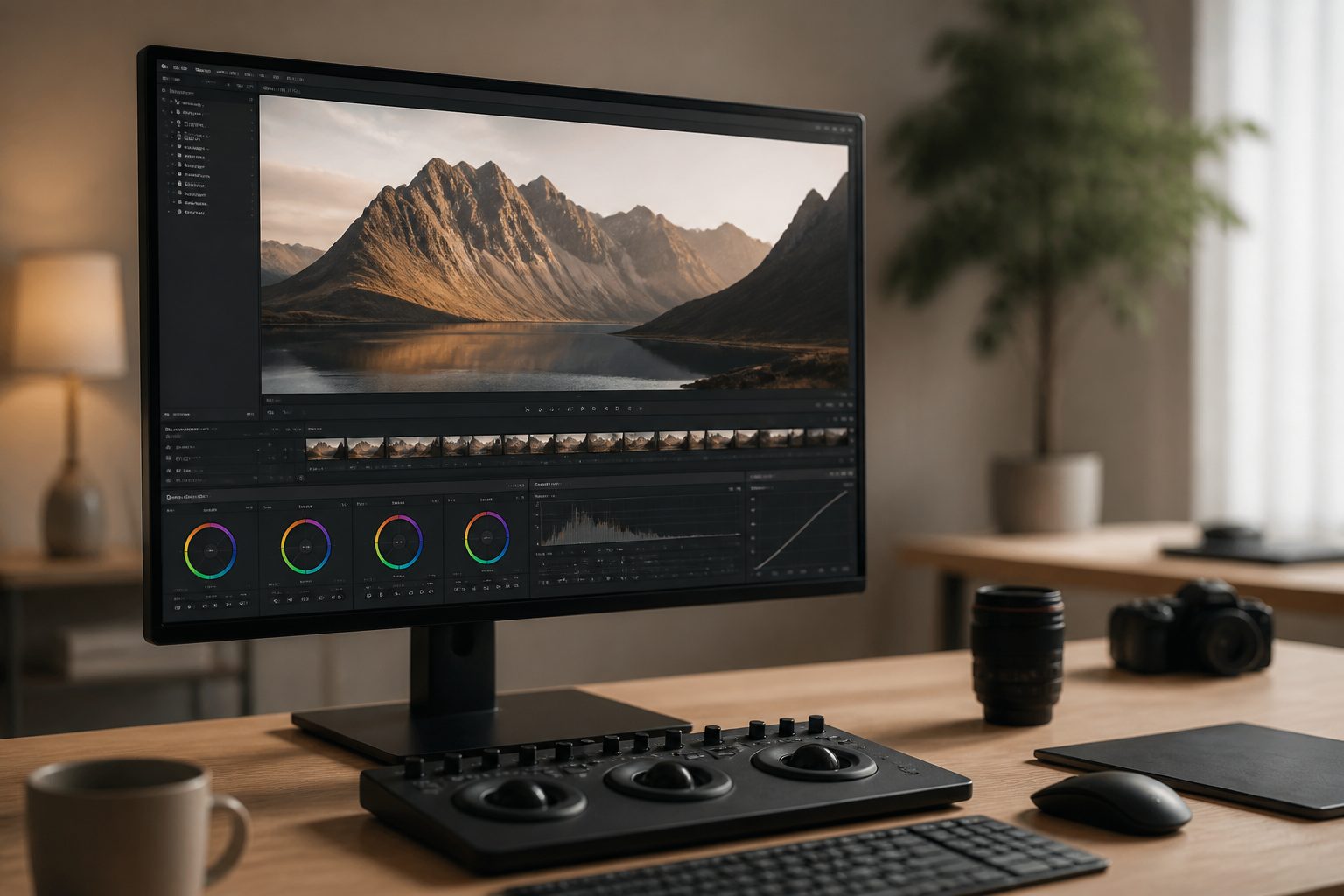
Two videos shot on the same camera, in the same room, can look worlds apart — one flat and amateur, the other rich and cinematic. The difference is usually colour grading: the editing step where raw footage gets its final look. It’s the part most clients never think to ask about, and it’s often what separates a video that feels professional from one that doesn’t.
This guide explains what colour grading actually does, why it matters for your brand, and what to ask for when you commission a video.
Colour correction vs. colour grading
People use the terms interchangeably, but they’re two different jobs done in sequence.
- Colour correction is the technical fix. It balances exposure, sets accurate white balance, and makes sure skin tones look natural and shots match each other. The goal is “correct” — footage that looks the way the eye saw it.
- Colour grading is the creative layer on top. This is where a mood and a look get applied — warm and golden, cool and clinical, punchy and vibrant, or soft and muted. The goal is “feeling”, not just accuracy.
You almost always need correction. Whether you grade for a strong stylistic look depends on the brand and the message.
Why colour grading matters for your brand
Colour is emotional before it’s anything else. The grade tells the viewer how to feel before a single word is spoken.
It sets the mood
A warm, slightly golden grade feels inviting and human — good for hospitality, F&B and lifestyle brands. A cooler, cleaner grade feels precise and trustworthy — good for tech, healthcare and finance. The same footage graded two ways can sell two completely different feelings.
It signals production value
Audiences can’t articulate why a video looks “expensive”, but they feel it. A considered grade is a big part of that perception. Skipping it is one of the fastest ways to make an otherwise well-shot video look cheap.
It keeps you consistent
A defined grade becomes part of your visual identity. When every video your brand puts out shares the same colour treatment, your content starts to feel recognisably yours across the feed — the same way a consistent logo or font does.
What colour grading can and can’t fix
Grading is powerful, but it isn’t magic. Setting expectations matters.
It can: rescue slightly under- or over-exposed shots, match footage from different cameras or times of day, deepen a flat image, and apply a consistent stylistic look across a whole video.
It can’t: recover detail that was never captured (badly blown-out highlights or crushed shadows are often gone for good), sharpen genuinely soft footage, or fix poor lighting on set. This is why good crews light carefully in the first place — grading enhances good footage, it doesn’t resurrect bad footage.
The lesson: the look starts on set, not in the edit. A team that shoots with the grade in mind gives the colourist far more to work with. That’s how we approach it on every videography shoot.
The grading process, briefly
You don’t need to know the software, but understanding the rough steps helps you brief better:
- Balance the shots. Correct exposure and white balance so every clip is a clean, neutral starting point.
- Match across the edit. Make sure shots cut together smoothly without colour or brightness jumping around.
- Apply the creative look. Build the mood — the warmth, contrast and colour character that define the video.
- Refine the details. Protect skin tones, draw the eye where it should go, and finesse problem shots.
On a brand video, this stage is also where a reusable “look” can be saved, so future videos stay on-brand without starting from scratch each time.
How to brief a colour grade
You don’t need the technical vocabulary. You need references and adjectives.
- Pull references. Two or three videos or stills with a look you like say more than a paragraph of description.
- Use feeling words. “Warm and homely”, “clean and clinical”, “moody and premium” — these guide the colourist effectively.
- Bring your brand colours. Share your palette so the grade complements rather than clashes with it.
- Think about where it’ll run. A look optimised for a bright phone screen on the go is different from one built for a controlled boardroom playback.
Frequently asked questions
Is colour grading included in standard video production?
Basic colour correction usually is — it’s part of delivering watchable footage. A more involved creative grade is sometimes a separate line item, depending on the scope. Always clarify with your production team what level of grading the quote covers.
Can you grade a video that was already shot?
Yes, within limits. You can correct and grade existing footage, and the result depends entirely on how it was captured. Well-exposed footage grades beautifully; badly lit or blown-out footage has less room to improve. Grading enhances what’s there — it can’t invent detail that was never recorded.
Does every video need a stylised grade?
No. Some content — interviews, internal training, straightforward explainers — just needs clean, accurate correction. Save the strong stylistic grade for brand films, ads and anything where mood is doing real work. Over-grading the wrong content can look gimmicky.
Colour grading is the quiet step that makes everything else look intentional. If you want your videos to have a consistent, on-brand look, we’ll build it in from the shoot onward. Tell us about your project and we’ll get the look right.