An event is a brand experience compressed into a few hours. Event branding is the work of making every touchpoint — from the registration desk to the stage backdrop to the Instagram frame — feel like one coherent thing. In Singapore, where conferences fill Suntec, Marina Bay Sands and the expo halls almost every week, a well-branded event reads as organised and credible before a single word is spoken. This guide covers how we build an event identity and the collateral system around it.
Start with the event identity
Most events need their own mark: a name, a logo lockup, a theme line and a visual treatment that can stretch across a hall. The first decision is whether the event sits under a parent brand or stands on its own. A company’s annual customer day usually carries the parent identity with an event sub-mark. A flagship conference or a festival often warrants a standalone identity that can grow year on year. Either way, the system has to flex from a tiny lanyard to a ten-metre backdrop without falling apart.
We define the core kit early: logo lockup, colour palette, one or two typefaces, a graphic motif and a clear rule for how they combine. That kit is what keeps fifty pieces of collateral feeling like one event. It’s the same systems discipline we bring to broader branding and design, applied to a space people walk through.
Map every touchpoint
The fastest way to a disjointed event is to design pieces as they come up. Instead, map the full touchpoint list up front so nothing is missed and everything is consistent. A typical list includes:
- Arrival: registration desk, name badges, lanyards, welcome signage.
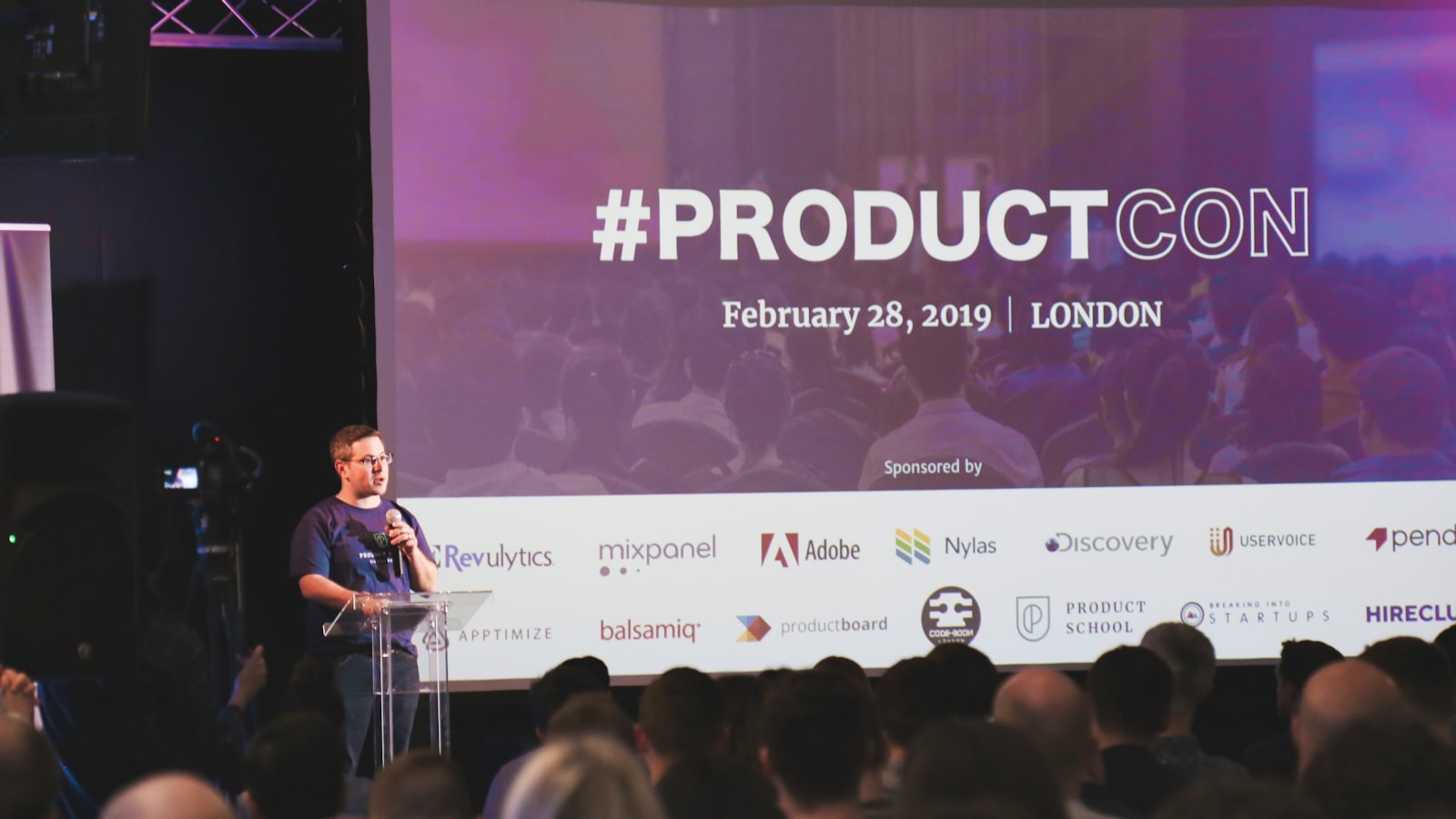
- Main stage: backdrop, holding slides, lower-thirds, presentation template.
- Wayfinding: directional signage, room and zone markers, floor decals.
- In-room: banners, table settings, programme cards, sponsor boards.
- Digital: event website, EDM invites, social frames, holding loops.
- Takeaways: goodie bags, printed programmes, merchandise.
Listing them all at the start also drives the budget and the print order, so you’re not paying rush fees for the one banner everyone forgot.
Wayfinding people can follow
In a big venue, signage is service. Attendees should always know where they are and where to go next without asking. Good event wayfinding uses consistent placement, large legible type and a simple logic — zones, colours or numbers that match the programme. Sightlines matter: a sign hung where a crowd blocks it does no work. We plan signage against the venue floor plan, not in the abstract, and account for the fact that most people are reading it on the move.
Plan for production lead times
Large-format collateral is unforgiving on timing. Backdrops, fabric banners, hanging signs and custom-built structures need artwork finalised days ahead, and printers get booked out around peak event seasons. We work backwards from the event date: design lock, print files, proofing, production, delivery and install — each with a buffer. Last-minute changes to a printed backdrop are expensive or impossible, so we front-load the decisions and lock the big-format pieces first.
Design for the photo
Much of an event’s reach happens after it ends, through photos and posts. So we design moments worth capturing: a strong stage backdrop that frames speakers well, a branded photo wall or step-and-repeat, and shareable social frames that put the event identity into attendees’ own posts. The aim isn’t gimmicks — it’s making sure that when someone shares the moment, your brand is naturally in the frame.
Build it to be reused
Plenty of event collateral is throwaway by nature, but the system shouldn’t be. A well-built event identity carries into next year’s edition, a webinar series or a roadshow with minimal rework. We keep master files organised and templated so the next event starts from a kit, not a blank page — protecting the investment and keeping the series recognisable over time.
Keep the digital and physical in step
An event lives online before, during and after the day itself, so the digital pieces have to match the room. The invite EDM, the registration page, the holding slides and the social frames should all carry the same identity as the printed backdrop and the lanyards. When the email that brought someone in looks like the stage they’re sitting in front of, the whole event feels considered. We design the digital and physical kit from one master so nothing drifts, and so the team can roll out updates — a changed speaker, a new sponsor — without rebuilding from scratch.
Frequently asked questions
Does our event need its own logo?
Often, yes — at least a sub-mark. A recurring or flagship event benefits from an identity that gives it personality and lets it grow year on year, while smaller internal events may sit comfortably under the parent brand. The right answer depends on how distinct and how long-lived the event is.
How early should event branding start?
As early as you can, because large-format production and venue logistics drive long lead times. Starting the design once the date and venue are confirmed gives room to map touchpoints, lock the big pieces and proof everything without rush fees. Late starts are where consistency and budgets break.
Can you handle both the design and the production coordination?
We design the full event branding system and prepare production-ready files, and we plan the rollout against your venue and timeline. You can see how we apply identities across touchpoints in our work portfolio.
Planning an event? Tell us about it and we’ll build an identity that holds together from invite to install.