In B2B manufacturing, a customer rarely sees your factory before they sign. They evaluate you on a quote, a certification list, and whether your operation looks credible. Good manufacturing videography does what a site visit would — it shows the line running, the quality controls in place, and the people who run them. This guide covers what a capability film actually needs to do, and the real considerations of filming on a working factory floor in Singapore.
What manufacturing videography is for
Unlike consumer video, a factory film is rarely about emotion. Its job is to remove risk from a buyer’s decision. The audience is narrow but high-value, and each group is looking for something different.
- Procurement and OEM customers: proof of capacity, repeatability, traceability and clean processes. They want to see the line, not a logo.
- Partners and distributors: evidence you are a serious operation worth representing in their market.
- Investors and the board: scale, automation, and a story about where the business is heading.
- Talent and recruitment: increasingly, manufacturers in Singapore film to attract engineers and operators in a tight labour market.
One well-made capability film usually serves all four with different edits. The hero piece runs two to three minutes for your website and sales deck; shorter cuts handle LinkedIn, recruitment, and trade-show loops.
The films a manufacturer typically needs
Most precision-engineering and advanced-manufacturing firms we speak to in Singapore need one or two of these, not all of them.
Capability / corporate film
The flagship. It walks a viewer through what you make, the processes behind it, your quality and certification regime (ISO, traceability, clean-room class), and the scale of the operation. This is the one to invest in.
Process and line documentation
Focused pieces that follow a product through the line — from raw material to finished, inspected part. Useful for technical sales, onboarding, and explaining a complex process to a non-technical buyer.
Recruitment and culture content
Short, human videos showing the people, the work and the progression on offer. With manufacturing competing hard for talent around Tuas and Jurong, this format earns its keep.
ESG and sustainability stories
As customers push supply-chain accountability, footage of energy, waste, and safety practices increasingly supports tenders and annual reporting.
Filming on a working factory floor
This is where manufacturing videography differs most from any other shoot. A factory is an active, hazardous, schedule-driven environment, and the crew has to fit into it — not the other way round.
Safety and PPE come first
Every crew member goes through your site safety induction and wears the required PPE — helmet, safety glasses, ear protection, steel-toe boots, hi-vis. We brief the team to respect machine guarding, walkways and exclusion zones, and we never ask an operator to remove a guard or bypass a safety step for a better shot. A WSH-conscious manufacturer notices immediately whether a crew belongs on a floor.
Scheduling around uptime
Production rarely stops for a video. We plan shots around the line’s actual rhythm — capturing a changeover, a particular run, or a shift start — and stay flexible when schedules move. Often the most efficient approach is a tightly storyboarded single day with a clear shot list agreed with your production manager in advance.
Light and fast machinery
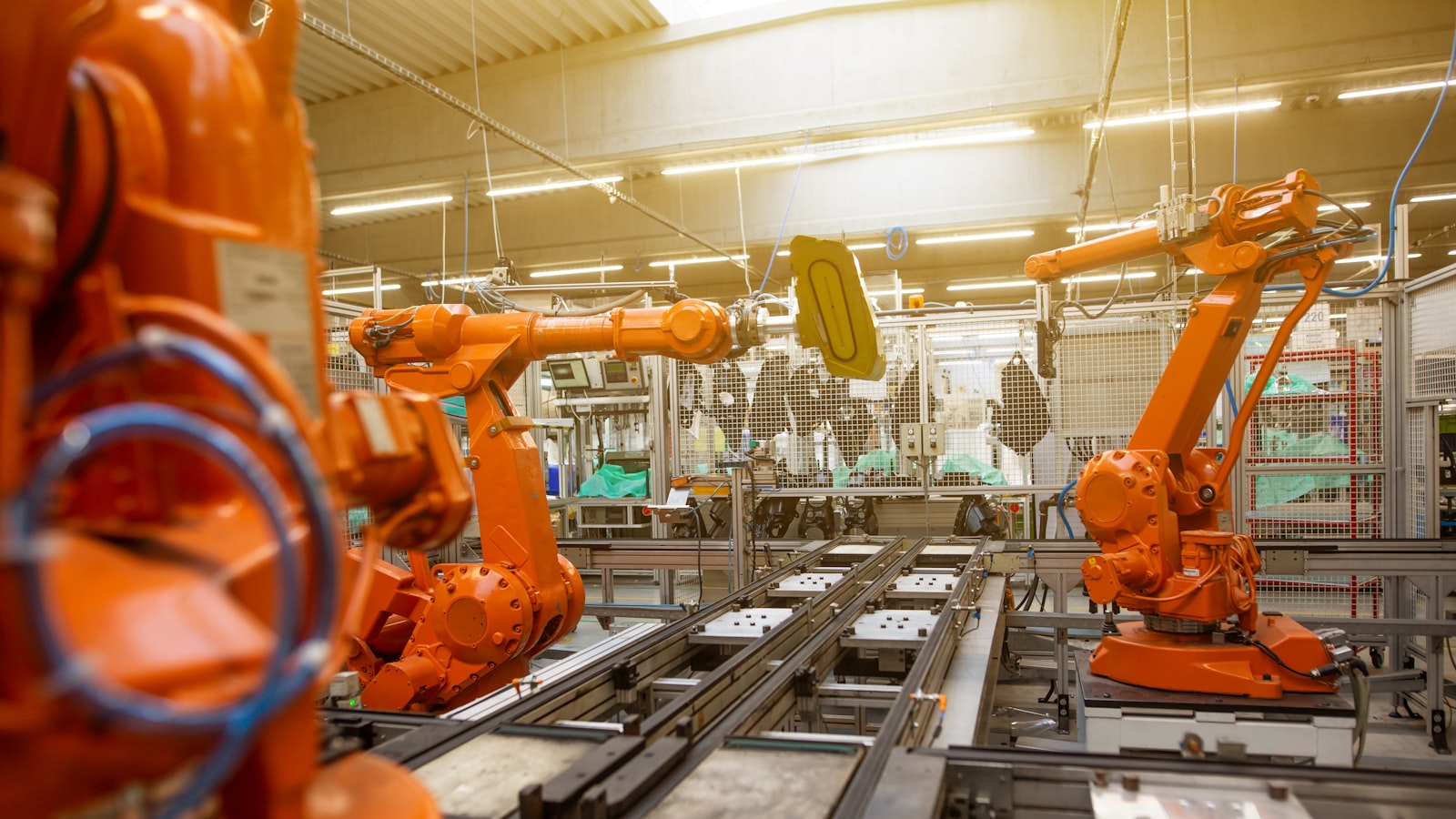
Factory floors are technically demanding. Mixed lighting — sodium, fluorescent, LED — plays havoc with colour, and many areas are darker than they feel. Fast-moving machinery can strobe or smear at the wrong shutter settings. The fix is proper camera discipline (shutter angle, frame rate, sometimes high-speed for a satisfying slow-motion of a press or robotic arm) and discreet supplementary lighting that doesn’t disrupt operators.
Protecting IP and confidentiality
For many manufacturers the process is the competitive advantage, and the last thing you want is a proprietary jig, tooling layout or process parameter visible on YouTube. This is a planning conversation we have before anyone films.
- Mark off-limits areas and machines on the shot list so nothing sensitive is captured by accident.
- Shoot tighter or from angles that show capability without revealing the method — a part emerging, not the exact mechanism producing it.
- Agree an approval step where your technical team reviews the edit before anything is published.
- Handle NDAs and footage storage properly; raw files of your floor should be treated as confidential.
A crew experienced in industrial work expects these constraints and plans around them rather than treating them as obstacles.
Drone and the bigger picture
An aerial pass over the plant — the building footprint, logistics yard, solar on the roof — instantly communicates scale that a ground shot cannot. In Singapore, drone work is regulated by CAAS, and many industrial estates sit near operational airspace, so flights need the right permits and an assessment of the location before the day. We factor this into planning rather than assuming a drone can simply turn up. Used well, two or three aerial shots lift a capability film from a tour into something that looks like a serious enterprise.
Getting value from one production day
Manufacturing shoots have high fixed costs — induction, setup, working around production — so the smart move is to capture once and edit many. From a single well-planned day you can typically produce a hero capability film, a couple of process explainers, a recruitment cut, and a set of short vertical clips for LinkedIn and trade shows. Pairing video with stills for your website and brochures in the same session is far more economical than two visits. Our videography service is built around this kind of efficient, single-day capture, and you can see the range of finished work on our portfolio.
Frequently asked questions
How do you film without disrupting production?
We plan the shot list with your production manager around the line’s actual schedule, work in PPE within agreed zones, and use discreet lighting. Most of the time we capture the process as it genuinely runs, scheduling specific shots — a changeover, a particular run — rather than asking the floor to stop for us.
How do you protect our proprietary processes?
Before filming we agree which machines, areas and details are off-limits, frame shots to show capability without the method, and build in a technical approval step so your team reviews the edit before anything is published. Raw footage is treated as confidential.
Can you film clean-room or ISO-controlled areas?
Yes, provided we follow your protocols — gowning, equipment wipe-down, and any class requirements. We brief the crew to your standards and, where access is restricted, can shoot through viewing panels or use a single trained operator to minimise the footprint.
Is drone footage of the plant possible in Singapore?
Often, but it depends on location. Many industrial estates near Tuas and Changi sit close to controlled airspace, so we check CAAS requirements and secure the necessary permits before committing to aerial shots. We confirm feasibility during planning rather than on the day.
Planning a capability film for your operation? Tell us about your facility and we’ll scope a shoot that respects your floor, your schedule and your IP.