Car photography is the art of making a large, intensely reflective object look powerful, clean and desirable — and it is harder than it looks. A car’s body is essentially a giant curved mirror that reflects the entire sky, the surroundings and the photographer, while its proportions and stance have to be captured to flatter rather than distort. For Singapore car dealers, used-car platforms, detailers, workshops and automotive brands, good photography directly affects how quickly a vehicle sells and at what price. This guide covers how we approach car photography here.
Reflections: the central challenge
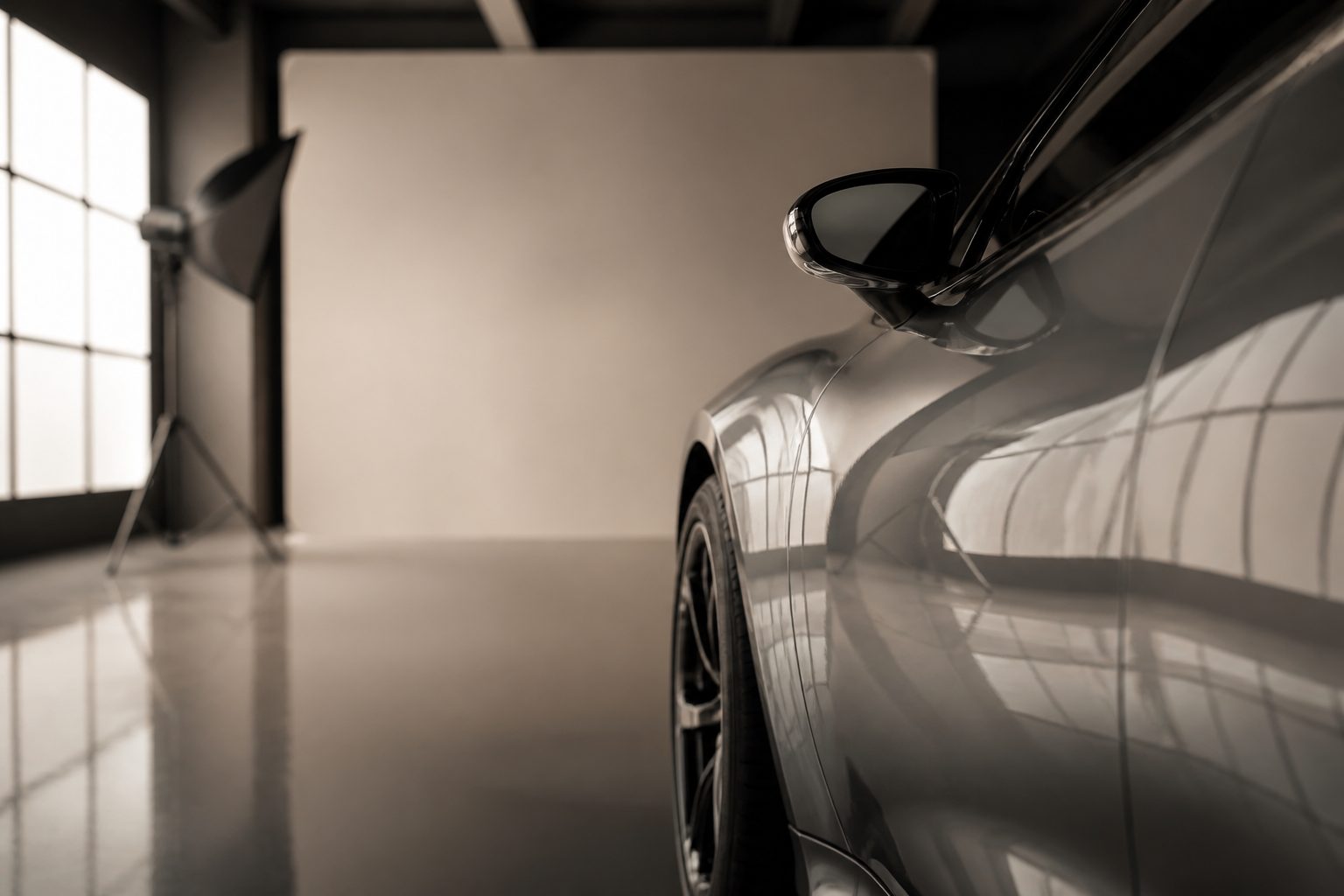
The defining problem of car photography is that the paintwork reflects everything around it. A poorly shot car shows the photographer, passing traffic, ugly buildings and a cluttered sky smeared across the bonnet and doors. Controlling these reflections is the whole game. In a studio, we use large diffused light sources and overhead lighting to create smooth, even reflections that follow the car’s curves and reveal its lines. On location, we control reflections by choosing the position, time of day and surroundings carefully — what the car reflects becomes part of the composition rather than a distraction. This precision is the same discipline behind all our photography and content.
Stance, angles and making the car look its best
How a car is photographed dramatically changes how it feels. A low camera angle makes a vehicle look powerful and planted; the classic three-quarter front angle shows the front and the profile together and is the workhorse hero shot. We choose focal lengths that keep proportions honest — wide lenses up close distort and stretch a car unflatteringly. Wheels turned slightly towards the camera, the car positioned to show its best lines, and a clean separation from the background all contribute to a vehicle that looks dynamic and premium rather than like a parking-lot snap.
Studio versus location
The two main approaches each have their place:
- Studio — total control over reflections and light, a clean seamless background, and a consistent, premium look ideal for brand campaigns and high-end listings. Requires a space large enough for a vehicle and the right lighting setup.
- Location — adds context, lifestyle and drama: an urban backdrop, an open road, an architectural setting. More affordable than building a studio shoot and great for storytelling, but dependent on weather, permits and finding clean surroundings.
In land-scarce Singapore, finding the right location — and the access and permits to shoot there, especially on roads or private property — takes planning. Blue hour and overcast conditions are often the most flattering for location car shots because they tame harsh reflections.
Detail shots that sell the car
Beyond the hero exteriors, a complete car shoot captures the details buyers care about: the headlights and grille, the wheels and brake calipers, the badge, the interior dashboard and seats, the infotainment screen, and any standout features. For dealers, honest interior and detail shots build trust and answer the questions a buyer would otherwise have to visit to ask. For brands, these macro details convey craftsmanship and design intent. We shoot a layered set so the listing or campaign tells the full story, the way you can see across our portfolio of work.
Used-car and dealer photography
For the used-car and dealer market, consistency and honesty are everything. A platform full of vehicles shot to the same angles, lighting and standard looks professional and trustworthy, and it lets buyers compare like with like. Clean, well-lit, accurate images that show the true condition — including the interior and any wear — generate more enquiries and reduce wasted viewings. We set up a repeatable system so a steadily changing inventory stays visually uniform, whether shot at the showroom or on location, and we ensure each vehicle is properly cleaned and detailed before shooting, because every smudge and water spot shows under good light.
Preparation: a clean car is everything
No amount of skill rescues a dirty car. Before any shoot the vehicle should be thoroughly washed, detailed and the glass and wheels cleaned, because reflections and close-ups expose every speck of dust, fingerprint and water spot. Interiors need vacuuming and tidying. We factor detailing into the plan and inspect the car before shooting, since fixing dirt and smudges in post is slow and expensive compared with cleaning the car properly first.
Frequently asked questions
How do you stop reflections ruining car photos?
By controlling what the paintwork reflects. In a studio we use large diffused lights to create smooth, even reflections that reveal the car’s lines; on location we carefully choose the position, time of day and surroundings so the reflections work for the image rather than against it. It is the core skill of car photography.
Studio or location — which is better for my cars?
Studio gives total control and a consistent premium look, ideal for brand work and high-end listings. Location adds context, drama and lifestyle and is often more affordable, but depends on weather, permits and clean surroundings. We recommend based on your goals and budget.
Do you shoot interiors and details too?
Yes. A complete shoot includes the interior, dashboard, wheels, badges, headlights and standout features. For dealers these honest detail shots build buyer trust and reduce wasted viewings; for brands they convey craftsmanship and design.
Can you shoot a whole dealer inventory consistently?
Yes. We set a repeatable system — same angles, lighting and standard — so every vehicle matches and your platform looks professional. Each car is cleaned and detailed first, and we shoot honest images that show true condition to generate better-quality enquiries.
Selling cars or building an automotive brand? Tell us about your vehicles and we will plan the shoot.