Family photography is built on timing and trust far more than on equipment. A newborn will not perform on cue, a toddler has roughly twenty minutes of cooperation, and the moments worth keeping — a parent’s hand cupping a tiny head, a sibling’s first cautious peek into the cot — happen in the gaps between the planned shots. This guide covers how we approach family and newborn sessions in Singapore: the safety that underpins newborn work, when to book, and how to get genuine connection rather than stiff, say-cheese portraits.
Newborn safety is non-negotiable
Before any aesthetic decision, newborn photography is a safety discipline. Those serene images of a baby with chin resting on folded hands are almost always composites — two separate frames blended in post, with a hand supporting the baby in each. A newborn is never placed in an unsupported pose for real.
- Always a spotter. A parent’s hands stay within reach of the baby at all times. We photograph around that support and remove it later if needed.
- Warm the room. Newborns settle and sleep when warm — we heat the room well above normal comfort so the baby can be safely undressed.
- Hygiene and patience. Clean hands, clean props, sanitised surfaces, and no forcing a pose the baby resists. If a position causes a baby to fuss, it is wrong, full stop.
- Never composite away the truth of safety. The editing makes an image look effortless; it does not replace a real hand holding a real baby on set.
Any photographer who cannot explain how they keep a newborn safe should not be holding your baby. This is the first question to ask, not the last.
Timing: the first fortnight matters
For that curled-up, deeply sleepy newborn look, the sweet spot is roughly the first 5 to 14 days. In this window babies still fold easily into womb-like poses and sleep through much of a session. After two to three weeks they are more alert, less inclined to settle, and the images take on a different — still lovely, but more awake — character.
In Singapore this often coincides with the confinement period, so we are used to working at home during those early weeks, or scheduling a studio session for the very end of confinement if parents prefer. There is no single right answer — an alert one-month-old makes wonderful eye-contact portraits — but if the tightly-curled aesthetic is the goal, booking around the due date and shooting early is the way to get it.
Working around feeds, naps and the baby’s clock
Newborn sessions run on the baby’s schedule, never the photographer’s. A session might be booked for two to three hours, but most of that is patience — feeding, soothing, waiting for deep sleep, then working quickly while it lasts. We never rush a feed or wake a settled baby for the sake of the timetable.
With toddlers and older siblings in a family session, the same realism applies. We front-load the shots that need everyone cooperating, keep the pace playful, and accept that a meltdown is part of the day rather than a disaster. Photographing tired or hungry children against the clock simply does not work, and pretending otherwise leads to forced smiles that no one likes.
Posing families to look like themselves
The fastest way to make a family look uncomfortable is to over-pose them. Our approach to family photography leans on prompts rather than rigid positions — we set up a flattering arrangement and good light, then give the family something to do: walk towards us, lift the toddler, whisper something to make the older child laugh, look down at the baby together.
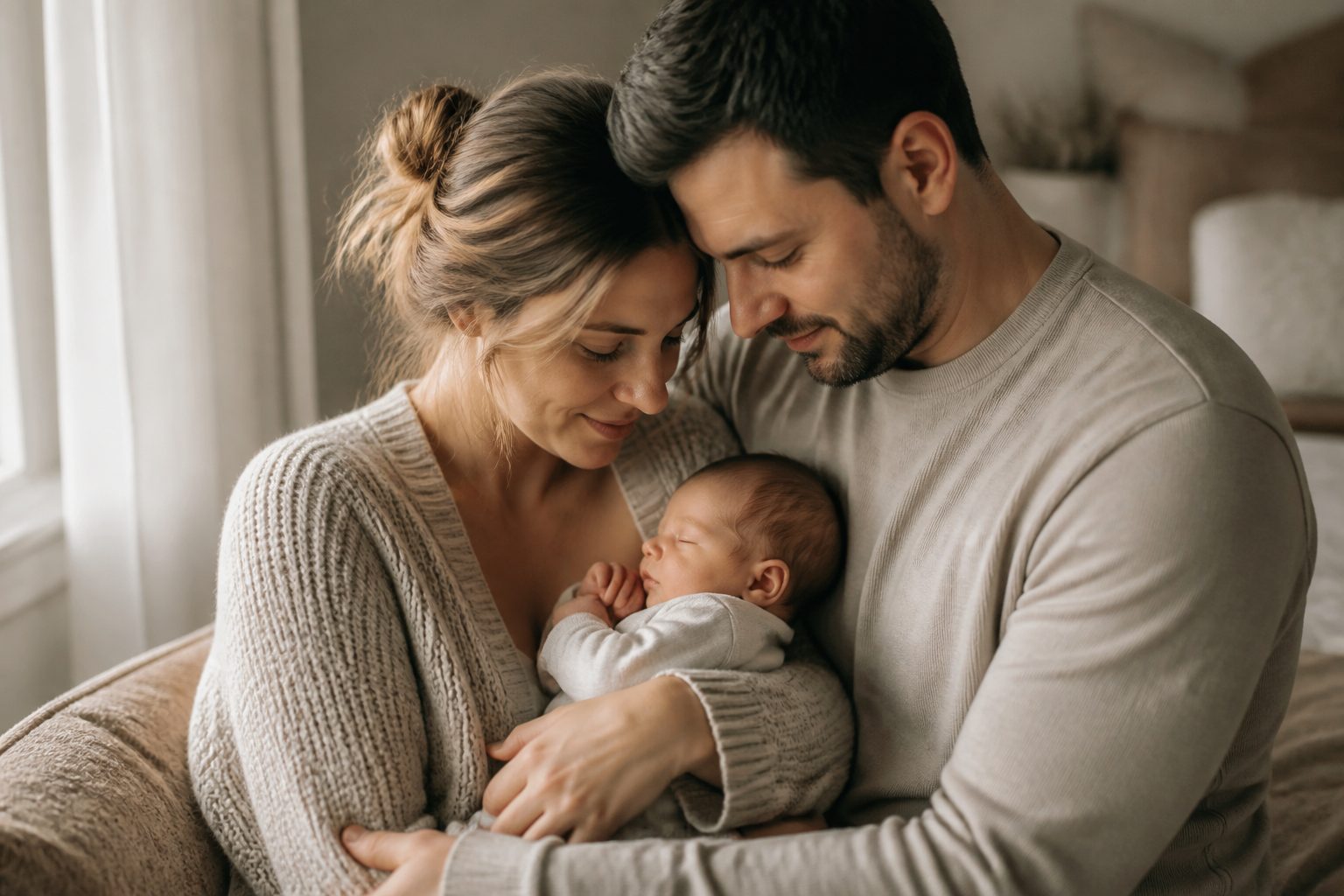
The connection in those moments is the photograph. A mother instinctively kissing a newborn’s head reads as real because it is; the same gesture held and posed for ten seconds does not. We direct enough to keep the composition clean and the light right, then step back and let the genuine interaction happen. The keepers almost always come from the in-between moments.
Light, location and a calm set
Soft, directional natural light is the backbone of this work. A large window with the harsh midday sun diffused gives the gentle, wrapping light that flatters skin and creates soft shadow. We position the baby with the light flowing across them — never flat-on, never a hard flash near a newborn’s eyes.
Most family sessions in Singapore happen in one of two places, and each has its merits:
- At home, in an HDB flat or condo: familiar, comfortable, and full of meaning. We scout for the best window, usually the living room or main bedroom, and shoot lifestyle-style — the family in their actual space.
- In a studio: controlled light, props and backdrops, and a warm, dedicated environment, which some parents prefer for newborns.
For brands in the parenting, healthcare or lifestyle space, the same skills produce authentic family imagery for campaigns and websites — real warmth photographs better than anything staged. It is part of the broader photography and content work you can see across our portfolio.
Frequently asked questions
When should I book a newborn session?
Ideally before the baby arrives, so we can hold a flexible date around the due date. For the classic sleepy, curled-up newborn look, the first 5 to 14 days is the window. In Singapore that often falls during confinement, so home sessions in those early weeks are common.
Are those curled-up newborn poses safe?
The advanced ones are achieved safely through compositing — the baby is supported by a hand in every real frame, and two images are blended later. A baby is never left unsupported. A spotter stays within reach throughout, and we never force a pose the baby resists.
How do you get young children to cooperate?
We do not fight their mood — we work with it. Sessions are timed around naps and feeds, kept short and playful, and built on prompts and games rather than “sit still and smile”. The natural, slightly chaotic moments usually make the best family photographs anyway.
Planning a session? Tell us your due date or your family’s story and we will plan family photography that is safe, relaxed and genuinely yours.