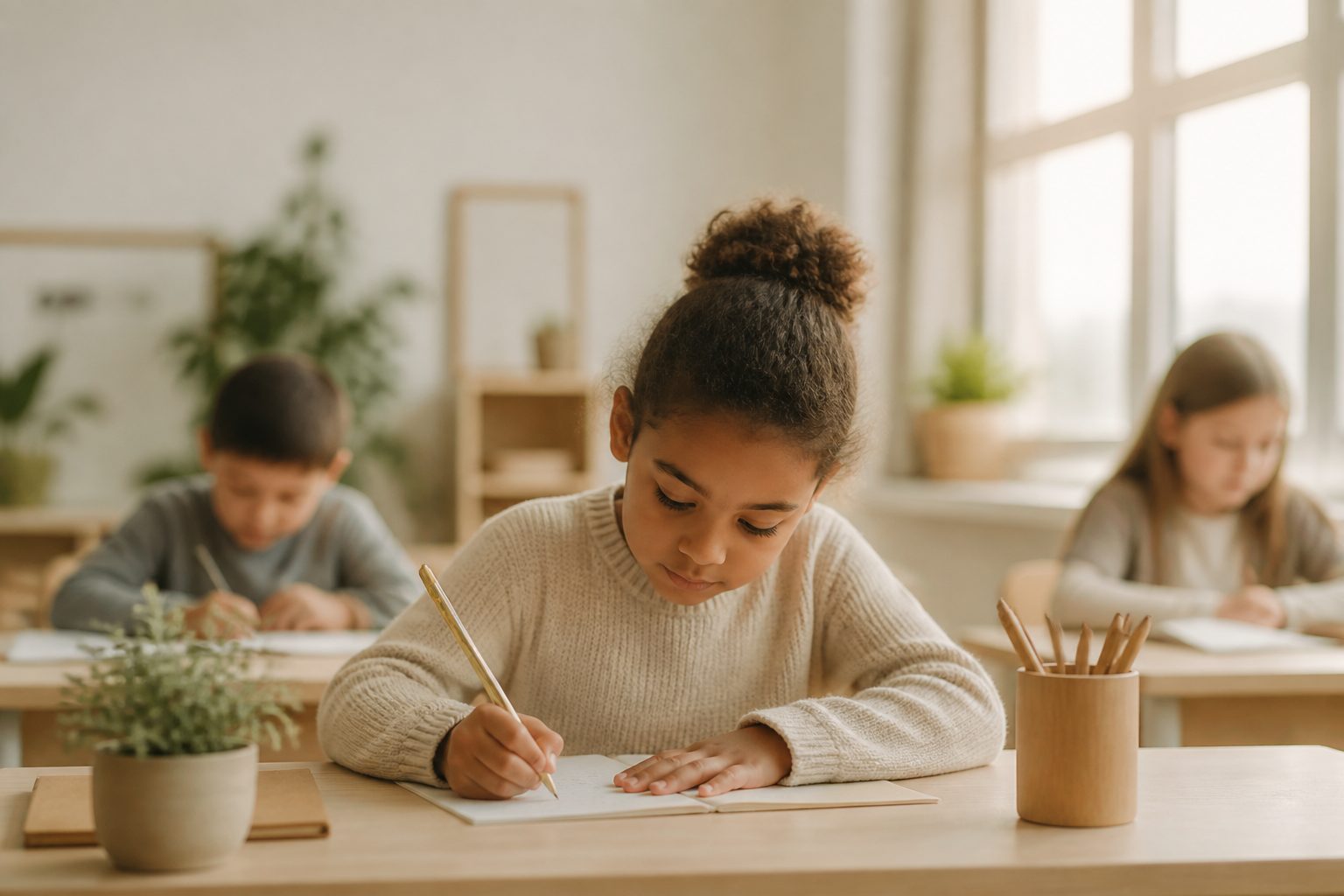
Good school photography is the difference between a prospectus that feels alive and one that feels like a stock catalogue. Parents choosing a preschool, an enrichment centre or an international school are buying a feeling as much as a curriculum — warmth, safety, a child who is genuinely engaged. This guide covers how we approach school photography for Singapore institutions, starting with the part most photographers get wrong: consent and child safeguarding. Get that right and everything else becomes possible.
Consent and safeguarding come first
Before a single frame is taken, the paperwork has to be in order. Photographing children carries obligations that ordinary commercial shoots do not, and in Singapore that means working within the Personal Data Protection Act (PDPA) as well as each school’s own policies.
In practice, school photography starts with the institution confirming which children have a signed photo-release on file. Many MOE schools, private and international schools, and preschools collect consent at enrolment, but it is never safe to assume. We ask for a clear list — or a simple system on the day, such as a coloured lanyard or sticker — that tells us at a glance which pupils may be photographed and which must be kept out of frame or shot from behind.
- Default to caution. If consent status is unclear, the child does not appear identifiably in the image.
- Brief the escort. A staff member who knows the cohort should accompany the shoot to flag any child who must be excluded.
- Handle files responsibly. Images of minors are personal data — they should be transferred securely, stored only as long as needed, and never used beyond the agreed purpose.
This is not red tape for its own sake. It protects the children, the school’s reputation, and your right to actually use the photographs afterwards.
Candid moments beat stiff poses
The instinct on a school shoot is to line everyone up and say “smile”. Resist it. The images that sell a school are the ones that show real learning happening — a child mid-question with a hand up, two pupils heads-together over a science kit, a toddler concentrating on threading beads. Posed rows look like a school photo from 1995; candid moments look like a place you would send your child.
Working this way takes patience. We tend to settle into a classroom quietly, let the children get used to the camera, and then wait. The best frames usually arrive a few minutes after everyone has forgotten we are there. A longer lens helps — it lets us photograph genuine engagement from across the room without leaning into a child’s space and breaking the moment.
Showing diversity and engagement honestly
Singapore parents are quick to spot a brochure that does not reflect reality. If your enrolment is multicultural, your imagery should be too — and not in a tokenistic, one-of-each way, but as a natural reflection of the cohort. The same goes for activity: show the range of what a day actually involves, from focused desk work to messy art, outdoor play, music and group projects.
Engagement is the through-line. A single photograph of a child who is clearly absorbed in what they are doing communicates more about teaching quality than any amount of marketing copy. We brief shoots around capturing those moments of concentration and delight rather than a checklist of facilities.
Working around lessons, not over them
A school day cannot stop for a photographer, nor should it. The craft of school photography is being almost invisible — moving slowly, staying out of sightlines, and never turning a lesson into a performance. Children behave naturally only when the adult with the camera is not the centre of attention.
We plan the day with the school in advance: which classes are comfortable being photographed, what is happening when, and where the light is good at each hour. Most Singapore classrooms have generous windows, and natural classroom light flatters children far better than a pop-up flash that announces every shot and unsettles the room. Where rooms are dim, we lift the ISO and open the aperture rather than introducing harsh artificial light.
Campus, facilities and staff portraits
Beyond the classroom, a complete school photography library needs the supporting cast. Prospective parents want to picture the whole experience.
- Facilities: libraries, science and computer labs, sports halls, playgrounds and canteens — ideally with children using them, not empty.
- Campus and exterior: shot in good light to feel welcoming; early morning or late afternoon avoids the harsh overhead Singapore sun.
- Staff portraits: approachable, consistent headshots of teachers and leadership for the website and prospectus. Soft, even light and a relaxed expression matter more than a formal backdrop.
- Detail shots: artwork on the walls, a tidy reading corner, hands-on materials — the small textures that make a place feel cared-for.
For tuition centres, enrichment providers and universities the priorities shift slightly — more emphasis on focused study, technology and results — but the principles are identical: real people, real engagement, honest light.
Planning a shoot that actually gets used
The most common waste in school photography is shooting a beautiful set of images that the marketing team cannot use because consent was patchy or the shots do not fit the website’s formats. We plan backwards from where the images will live — prospectus spreads, website banners, social posts, Google profile — and shoot the right orientations and crops for each. A clear shot list agreed with the school keeps the limited shooting window productive.
This is the same content-first thinking we bring to every project in our photography and content service: imagery briefed around how it will be used, not just how it looks. You can see the range across our portfolio.
Frequently asked questions
How do you handle children without photo consent?
They are kept out of identifiable frames entirely — either excluded from the shot, positioned with their back to the camera, or composed out. We rely on the school to tell us clearly who may be photographed, usually through a list or a simple visual marker on the day, and we default to caution whenever status is unclear.
When is the best time to shoot a school?
A normal teaching day, not a staged event. Real lessons produce the authentic engagement that sells a school. We coordinate with the timetable to catch a variety of activities and the best natural light in each space, typically spreading across a morning and into the afternoon.
Can you photograph during a real lesson without disrupting it?
Yes — that is the whole point. We work quietly with longer lenses and available light, settle in until the children forget we are there, and never interrupt teaching. The unobtrusive approach is also what produces natural, candid images rather than posed ones.
Refreshing your school’s imagery? Tell us about your school and we will plan a shoot that respects your safeguarding obligations and gives your marketing real, usable photographs.